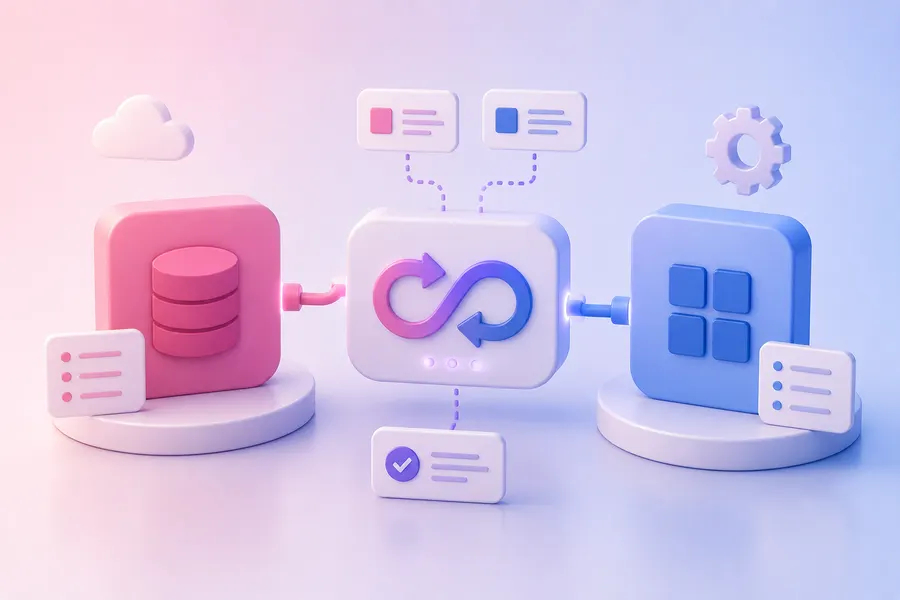
The default instinct when two systems don't talk to each other well is to replace one of them. That instinct is usually more expensive and more disruptive than the alternative: building an integration layer that lets both systems keep doing what they already do well, and handles the translation between them properly.
Why integration usually beats replacement
Replacing a system means migrating data, retraining users, re-validating every downstream report, and accepting a period where things are less stable than before. An integration, done well, touches none of that — it sits between systems that already work and makes them work together.
Less disruption to daily operations
Teams keep using the tools they already know — the integration works in the background, not as a forced relearning exercise.
Preserves institutional knowledge
Years of configuration, workflow habits, and knowledge built into an existing system don't get thrown away.
Faster time to value
An integration layer typically ships in weeks, not the months or quarters a full replacement project requires.
Lower overall risk
You're not betting the business on a new platform working correctly on day one — you're connecting two systems that already do.
What makes an integration durable instead of brittle
-
Map the actual data flow, not the assumed one
Field-level mismatches, type differences, and format inconsistencies between systems have to be identified before a single line of integration code is written.
-
Define a single source of truth per data type
When two systems can both write to the same field, you need an explicit rule for which one wins — or you get silent data drift.
-
Build resilient failure handling
Integrations run continuously and unattended. What happens when an API rate-limits, times out, or returns malformed data has to be designed in, not discovered in production.
-
Monitor and iterate after go-live
Source systems change their schemas and APIs over time. An integration that isn't monitored quietly breaks the day the first upstream change ships.
Systems that should be talking to each other, but aren't?
We build integration layers that are boring in the best way — reliable, monitored, and built to survive the next schema change. Talk to our integration team.